Tuesday, July 5, 2011

The roots of the Japan-Korea rivalry

By Diarmuid Delaney

Football, a truly world game, transcends race, culture and history, and at times acts as a catalyst for reconciliation between people and governments. In a region as historically and culturally diverse as Asia, football has indeed played out this role.

The Korea-Japan rivalry has emerged as the greatest in Asian football. Both countries compete for the title of ‘Asia’s best’ whilst sharing a turbulent history that further ignites this rivalry. Understanding this history, as well as what significance the 2002 World Cup had for the football of these countries will reveal the depths of this great rivalry.

Like Japan, Korea’s first contact with modern football as we know it today came through European influence in the late 19th century. However, as Dr Leonid Petrov of the University of Sydney and former translator for the 1994 South Korean Olympic team states, the roots of the game can be found deep in their national identity. Koreans recorded a ball-kicking game called ch’ukku in historic documents from over nine hundred years ago, taking their claim on an indigenous form of football.
           
Korea’s annexation at the hands of Japan between 1910 and 1945 was a dark period in Korean and Japanese history that continues to be a source of tension between the two countries to this day. This period of occupation however, according to the Korean Football Association (KFA) website empowered football into a means of ‘alleviating the frustrations of the subjugated Koreans and fostering the hope of liberation’.

Football became a way for Koreans to sustain their nationalism, and soon enough they began to outperform the Japanese on the pitch. Select Korean sides toured Japan in 1926 and 1935 respectively, one side touring unbeaten and another, Seoul, winning the All-Japan football tournament.

The Japanese influence on Korean football during the colonial period can be summarised in the words of one Korean coach, who before a game against a Japanese opponent said ‘You are not just playing football. You are fighting for the independence of the Korean people’.

Japan’s eventual defeat at the end of World War II did not change any resentment felt toward the former colonisers. This was also manifested in football.

Under Syngman Rhee’s Government, relations had not yet been normalised and animosity still remained. President Rhee was reluctant to have any sporting contact with Japan, however, Vice President Lee Ki-boong, also president of the Korea Sports Council, took advantage of Japan’s economic success and Rhee’s hatred of Japan, adding that there was one field we can always beat Japan: football.

He said “even before we were liberated we were always better than the Japanese at football”. Rhee allowed the 1954 World Cup qualifiers to go ahead on two conditions, that both games be played in Japan and that Korea return home triumphant or “drown themselves in the East Sea”. 

South Korea easily qualified, marking their first appearance in the FIFA World Cup. Korea’s dominance over Japan continued into the 1960’s with Japan’s well credentialed coach Dettmar Cramer’s team unable to yield a single victory over the Koreans.

The 1970’s and 1980’s proved equally successfully with Japan only managing four victories in thirty-one matches. However, Japan was beginning to make inroads into football and in a 1994 World Cup qualifier in Doha, Japan beat Korea and Seoul Sports ran the headlines ‘disgrace’. Despite the 1965 normalisation, the lingering resentment still continued to be manifested in media, politics and football.

The bidding for the 2002 World Cup provided another opportunity for Korea and Japan to play out the historical legacy. Hosting the World Cup became a matter of national pride with the dominating motivation ‘to beat Japan’. This was evident when the head of the Korean bidding team said “Our pride and history demand that we beat Japan. If we lose, it will hurt us greatly”.

With this in mind it was not a surprise that FIFA president Havelange considered the idea of ‘co-hosting’ the World Cup. Despite the economic successes of both countries and the successful adoption of democracy, both countries had failed to heal the wounds of history. Awarding the World Cup to one over the other would have unforeseeable consequences. On the 31st of May 1996, Joao Havelange awarded the 2002 World Cup hosting rights to Korea-Japan, in line with FIFA’s mission statement of using football as a unifying force.

Despite the historical legacy and strained relations between the two countries, Korea and Japan co-hosted a successful event dubbed by FIFA President Sepp Blatter the ‘World Cup of Smiles’. Although there were a few hiccups on the way such as the controversial Japanese textbook issue and the official order of the naming of the countries (i.e. Korea-Japan or Japan-Korea), co-hosting the event clearly improved the relations between the two countries, on a practical level and conceptual level. Chung Mong-Joon, chairman of the Korean Organising Committee expressed his deep gratitude that the ‘2002 FIFA World Cup has helped to bring the people of these two countries closer together’.

In a sign of the changing views of Japan and the rivalry, Japan defeated Korea in the semi-final of the 2011 Asia Cup in Doha. Instead of ‘disgrace’ on the front page of Seoul’s sports paper however, Koreans were lamenting the retirement of two of Korea’s 2002 World Cup heroes, Park Ji Sung and Lee Young-Pyo. Although the historical legacy between the two countries are the roots of the rivalry, the emergence of both countries as Asia’s football’s powerhouses continues to fuel the rivalry into arguably the biggest rivalry in Asian football. 


Introducing Shimizu S-Pulse

By Daisuke Matsuura


Shimizu's home ground - Nihondaira Stadium
Shizuoka prefecture is well known as the home of football in Japan. Many J. League players have thier roots in Shizuoka.

For Asian football fans, Kazuyoshi Miura, who is also known as the King Kazu is the biggest name from Shizuoka's football history and for those who are familiar with European football, Atsuto Uchida and Makoto Hasebe playing in Germany are two of the biggest current stars from Shizuoka.


Among many cities in Shizuoka prefecture, Shimizu (synoecized with the city of Shizuoka in 2003) had been the centre of Japanese football since 1970s by winning 13 high school titles in 20 years .


For Japanese people who didn't have a professional football league in their country, the high school football championship was the only and the biggest title in every year just like college football or basketball in the United States. With this brilliant record in high school football championship, Shizuoka and Shimizu started being recongnized as the home of football.


Shimizu S-Pulse is a club that establishes a base at this home of football, starting its history in 1991, one year before J. League. However, S-Pulse are still left uncrowned in the J. League after 19 years of J. League history and obviously never had a chance to play in AFC Champions League.


Although they have won three cup titles - Nabisco Cup in 1996, Asian Cup Winners Cup in 2000, and the Emperor's Cup in 2001 - for all football fans and S-Pulse supporters, winning the J-League championship is the earnest wish.


This is a brief background of my home town and the club I'm supporting. I will be writing articles on Shimizu S-Pulse in the eyes of the supporters from behind the goal.


Etoile shine in S.League

By Chee Seong - AFF Singapore correspondent

Etoile FC put a nightmare loss to Courts Young Lions a forthnight ago behind them with two convincing wins over basement clubs Woodlands Wellington and Tanjong Pagar United.

The Stars (as Etoile are known) celebrated the appointment of a new Chairman in style as they picked up the maximum points on offer. This also puts a smile back on the face of Etoile's faithfuls who have been in the doldrums ever since the infamous brawl involving Etoile and Hougang.

New signing Kamel Chaaouane marked his debut with the opening goal in the win against Woodlands. It was Woodlands Goalkeeper who stole the headlines though, his blunders allowing the Stars to go 3-0 up at the break thanks to another brace by Jonathan Toto. 

Woodlands battled back strongly but Etoile proved resolute in defence.

Geylang United picked up its fifth win in as many games after overcoming Woodlands and Tanjong Pagar with two 1-0 wins.

Striker Jung Hee Bong got the solitary goal against Woodlands while Mubarak Ahmad's first touch goal, seconds after coming on as a first half substitute claimed all three points for the Eagles. Mike Wong's side have gone 450 minutes without conceding a goal and they're now in 6th position on the ladder with 26 points.

Albirex Niigata (S) overcame a stubborn Balestier Khalsa side by a goal courtesy of Tatsuro Inui in the first half. Albirex further strenghtened their grip on fourth spot after this win.

The Japanese club, which is based in the West, are looking at the best ever finish in their S.League history.

Hougang United clawed back from two goals down to sink Gombak United who saw Wahlid Lounis sent off for a over the knee challenge. Ruhaizad Ismail and Park Kang Jin put the Bulls on top at the break.

The Cheetahs came back strongly in the second half however. Jordan Webb first rose highest to meet a Carlos Delgado free kick before Wahlid was given his marching orders. Substitute Sobrie Mazelan then scored a brilliant team goal in the 79th minute to level things up.

As the game looked headed for a draw, Jordan Webb capitalised on a defensive mix up to seal all three points for the Cheetahs. It was Jordan's 11th goal of the season.

Hougang gave full debuts to Vitor Borges and Shahril Alias who were signed during the transfer windows.

Results
Tanjong Pagar United 0-2 Etoile FC
Geylang United 1-0 Woodlands Wellington
Albirex Niigata (S) 1-0 Balestier Khalsa
Hougang United 3-2 Gombak United
Tanjong Pagar 0-1 Geylang United
Etoile FC 3-0 Woodlands Wellington


Round 20 fixtures
4 July 2011:
Gombak vs Albirex

5 July 2011:
Balestier Khalsa vs Tanjong Pagar United

6 July 2011:
Home United vs SAFFC

7 July 2011:
Albirex Niigata (S) vs Hougang United
Woodlands Wellington vs Courts Young Lions

8 July 2011:
Tampines Rovers vs Etoile FC

9 July 2011:
Tanjong Pagar United vs Gombak United

10 July 2011:
Woodlands Wellington vs Balestier
SAFFC vs Hougang United


Friday, July 1, 2011

Schaefer starts big task in Thailand

By Kitinan Sanguansak - AFF Thai correspondent
German Winfried Schaefer and Worawi Makudi
Picture: Football Association of Thailand
German coach Winfried Schaefer wants his charges to fight fiercely like a “war elephant” as the new Thailand national football team coach started his work to revive the Thais’ fortunes following the slump of form during the previous regime.
In FIFA's ranking table announced earlier this week, Thailand dropped further down to the lowly 123th place and the former Cameroon coach Schaefer quickly made a point of it, saying the need to arrest such downward slide when he was officially unveiled as the new national coach yesterday.
“The responsibility is high. We want to improve Thai football consciously. The national team fell down below 120 so we have to stabilise.
“For us, that’s down to the hard work and the improvement needs to take a step by step,” said the German veteran who built his coaching reputation from his stint at German club Karlsruher.
Schaefer, though, stated that he could not reverse the Thai team’s downward trend on his own, making his plea to all coaches of Thailand Premier League clubs to make collective effort in taking the national team forward.
“All the league coaches and I, we have to work together. I cannot change everything in one week as I need the help from the club coaches. They work with players every day, while I have players only for one or two weeks.
“If we have the success with the national team, the players will go back to the clubs with big confidence. So, both the club and country can grow up together.
“We need to work together for the nation. If the football league is very strong, it would be good for the national team. That’s my task and challenge and that’s why I’m here,” said Schafer who occasionally switched speaking German during the conference that lasted around half an hour at the Football Association of Thailand headquarters.
With Thailand having the elephant in the team’s emblem, Schaefer, who took over the reins following the resignation of former Manchester United captain Bryan Robson last month, was hoping that he could instill bravery into his new charges to perform on field like the “war elephant” in the battlefield.
“I want every country around us watch Thailand with the great respect. The team’s symbol is the war elephant which strikes great fear at the heart of enemies. That’s exactly what we need to aim for.
“The players must be happy to get into the team. It’s the honour to play for the country. Pulling on the national shirt, the players should be proud of themselves, that’s our aim. We need confidence, courage and character,” said Schaefer, the third foreign coach during Worawi Makudi’s reign as the FAT president.
The experienced German went on to underline the importance of the youth to the national team and he wanted to create idol players like Germany’s Michael Ballack to inspire the local young generation.
“The base of all national teams is the youth. Young people need the idol, whom they can look upon. In Germany, we have Ballack and (Bastian) Schweinsteiger. That’s very important. The young should have shirts of players from our team, not of Ronaldinho or (Lionel) Messi.”
Despite the fact that Thailand have had several foreign coaches, some of which failed to achieve the substance success, Schaefer was confident he could succeed where the others failed by returning the country to the place where they belong.
“We need a good strategy. We have to work like the professional. After watching the DVD of the games against Japan and Singapore, I saw what we must do. The players fought very well but we have to work on the tactic. They need to be disciplined, tactically.
“I think the players need courage. I felt the players were afraid when they took onto the field. Like I said earlier, we must go out like a war elephant.”


Changes afoot in Hong Kong

By Yick Hong Lam - AFF Hong Kong correspondent

A new Hong Kong Football Association (HKFA) board was elected at the latest HKFA Annual General Meeting at 28 June.

Brian Leung Hung-tak was re-elected as the Chairman and the nine board members were automatically re-elected as they were no other candidates.

The Chairman expressed concern over the budget for the government's Phoenix Project - which aims to reform and enhance the local professional football - after the meeting. He estimated the running cost per year of the new league structure will be HK$30 million (US$4 million), which is a large sum that HKFA nor the investors in domestic football can afford.

Board member Steven Lo Kit-sing, who is also the owner of South China FC, pointed out the money issue in domestic football.

"Offer the champions a winning purse of HK$10 million( US$ 1.3 million) and there will be a lot of clubs who are willing to spend."

According to Steven Lo, increasing the winning purse will be a quick fix to promote domestic football. As clubs will invest much more money to pursue the championships, it will result a better quality league and attract fans.

The current HK$120,000 (around US$15,000) league champions bonus can hardly form the basis for a competitive league as clubs won't increase their spending to bid for such small return.

Under the guidance of Steven Lo, the domestic powerhouse South China spent HK$30 million (US$4.9 million) last season, while the other domestic clubs generally spent less then HK$10 million (US$ 1.3 million) a season.

However, the spending of South China will also cut to HK$20 million(US$ 2.6 million) next season due to the departure of two highly paid international football stars, Nicky Butt and Mateja Kezman.

Also, failure to win the league and Silver Shield Cup also meant the club did not qualify to play in next year's AFC Cup. The team has also been eliminated from the cup in group stage this year. All of this means the club has little need to establish a large and strong squad in the coming season.

On the other hand, the current Hong Kong league champions Kitchee SC have announced the budget for next season will be increased to HK$12 million 
(US$ 1.5 million), aimed to retain the championship and also go far in the AFC Cup.

In although South China have no plan to sign another high profile player, they did appoint a high profile head coach for next season and plan to add at least three foreign players into the squad.

Jan Kocian, former Czech international who played in the 1990 FIFA World Cup quarter finals, and former national team manager of Slovakia from 2006 to 2008, has already signed a pre-contract with South China. He will sign the contract in July to make everything official.

Jan Kocian only coached 5 games for Jiangsu Sainty before being sacked by the Chinese Super League side. The Chinese media listed the poor communication skills of the coach as part of the reason for his sacking along with the poor results, with 1 draw and 4 losses.

However, Steven Lo Kit-sing has high confidence in the coach with vast European coaching experience and considered the failure of the coach's first spell in Asia due to cultural difference. 


He has met the coach in person and was impressed by some interesting ideas. Jan Kocian will also be responsible for recruiting the foreign players to fit his system and tactics, from a pool of 50 overseas players.

Steven Lo said the target of the club in next season is
to challenge for all domestic titles.


Thursday, June 30, 2011

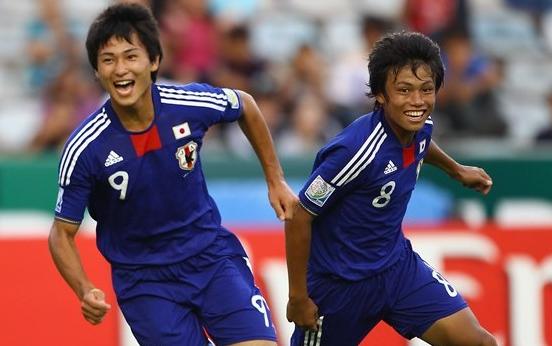
Japan impress in Mexico

By Nobuyuki Tosey

Japan have performed well in Mexico
The U17 World Cup is a competition where footballing education should really be prioritised over the demands of silverware. The idea is that it provides a first taste of international tournament football and high class opposition in an unfamiliar environment for those involved. 

However, for developing footballing nations such as Japan - whose youth systems are still in relative infancy - these tournaments provide an important indication of how the level of the young players produced by the current system fair against the top nations.

Furthermore with Japan having had numerous foreign coaches for the national team over the last decade, there's an interest in whether Japanese coach Hirofumi Yoshitake could go toe to toe with his international counterparts.

Japan faced a tough task to qualify out of their group as they faced fellow underdogs Jamaica and two world heavyweights in France and Argentina. Coach Yoshitake hoped that the 4-2-3-1 formation exhibited in the past by both the full national team and recently the U22's, would be the system to help them to progress.

It's a formation that suits the type of ball playing, not so physical players Japan produces: focusing on possession, collective defending and requiring intelligent runs and quick passes to create chances. Having watched the National team be frustrated by a lack of penetration when using this formation it would be interesting to see if such a young side had the tactical awareness to utilise it to full effect.

   
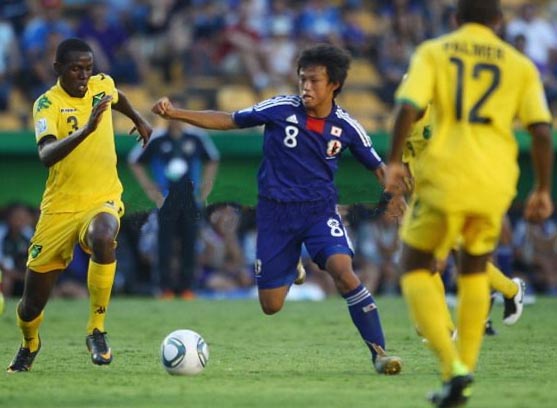
Jamaica 
Ishige in action against Jamaica
Getty Images
After a slow start it was the Jamaicans who came closest early on. Jamaica captain Omar Holness collected the ball, turned sharply and his shot from 30 yards struck the post with Nakamura beaten.

As Japan settled they saw more possession, but chances were few and far between for both teams and although Japan had a bright period towards the end of the half it didn't result in a goal. As is so often the case in tournament football, a substitution would change the shape of the game.

Yoshitake brought on Jamaican born Musashi Suzuki at half time to widen the attacking threat. It worked, Suzuki's width energetically supported by the left back Hayakawa often overlapping, stretched the Jamaican defence and resulted in more frequent chances for the Japanese.

The trend of Japan producing good attacking full backs as seen with Nagatomo, Uchida and now Sakai in the U22's, continues with this U17 team. A great run from the full back Muroya down the right gave the option for Matsumoto, who played a one-two with the marauding full back, took his first touch with his right and finished with his left.

With Jamaica searching for a winner, Japan nullified the threat with a mature display of possession football (61%) and the use of the physical, yet less technically gifted Suzuki as an outlet to close out the game. Although Japan hadn't been at their best and chances were scarce, their possession game and defensive organisation meant that they were unlikely to concede.

      
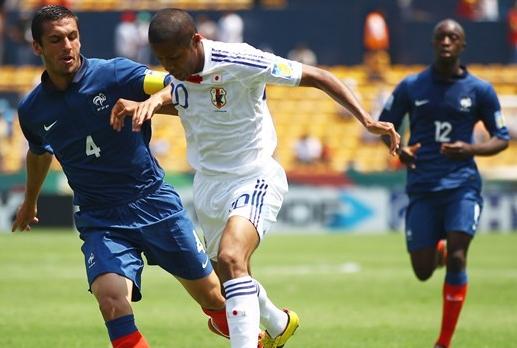
France 
Suzuki - not the best technically but good on the ball
Getty Images
If the Japanese weren't wary of the French already, they would have had to have taken note when France destroyed Argentina 3-0 in their opening game. But in a sign of the growing belief that Japan is ready to compete at the upper echelons of world football, Yoshitake expressed his confidence of a positive outcome. Obviously impressed by what he had seen, he opted to use Suzuki in a central role and pushed Hayakawa up to the left of the attacking midfield three.

Despite a bright start, France's superiority in terms of individual talent and physicality began to tell. Lenny Nangis was giving Muroya all sorts of problems as he struggled to adapt playing left back and the strong and powerful Zouma was preventing much of an attacking threat. It wasn’t long until Japan found themselves behind; Zouma intercepted the ball just outside his penalty area, drove through the midfield and laid off the ball to Nkusu, he found Yaisien, who took a touch to set himself and from the edge of the area caressed the ball into the top corner. Japan seemed rattled and were perhaps lucky to stay in the game after not being punished for individual errors.

Towards the end of the half Japan were able to instigate their passing game, but Suzuki was struggling to be the focus of the attack and it was hard to see where the goal would come from. Yoshitake once again made a change at half time, moving Suzuki to the right and taking off Akino for the more natural striker Minamino.

With Minamino being able to provide a better focus for the attacking midfield trio to work off of Japan were impressing. After good work down the left from Hayakwa, Ishige burst into the box and was fouled for a penalty. He picked himself up and sent the keeper the wrong way for the equaliser. Japan were brimming with confidence and twice Ishige should have put Japan in front after both Suzuki (shot wide) and Hayakawa (shot blocked) managed to break down the left and cut back to the number 8.

They almost paid for not taking their chances, as but for a good Nakamura save from a Meite shot they could have lost. Having said that, Japan finished the game frustrated as after the interval they completely turned the game around, managed 62% possession and the better chances to get the winner.

      
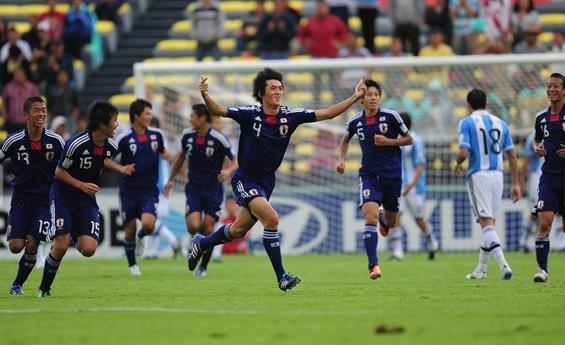
Argentina 
Ueda celebrates scoring against Argentina
Getty Images
Knowing that they only needed a draw to advance, coach Hirofumi Yoshitake took the bold step of making six changes for the game against Argentina, leaving out all of those on a yellow card. However it wasn't long before the decision paid off, as once again a Japanese full back showed attacking qualities. Kawaguchi burst past his opposite man and into the penalty area, managed to toe-poke at goal and with the keeper spilling, 15 year old Daisuke Takagi was on hand to open the scoring.

Argentina responded well for a 10 minute period and put the defence under pressure. But after holding out centre back Ueda rose highest to head Japan into a two goal lead from a well delivered Akino corner. The Argentinians were obviously frustrated and after Zarate was booked for catching Takagi in the first half, Montero was given his marching orders in the second with a nasty stamp on Akino.

With a 2-0 lead and a man advantage the game was pretty much sewn up. This was made sure of when, yet again, Suzuki (on as substitute) ran down the left, crossed for Akino and who buried the rebound after his first shot was parried. A clean sheet would have been good for confidence and despite flapping for a few crosses, second choice goalkeeper Niekawa had done well and made a magnificent save from an Ocampos header.

But it wasn't to be, as Bruno Ferreira beat him from all of 40 yards with a magnificent strike. The game finished 3-1 and thanks to France drawing 1-1 with Jamaica, Japan had won the group and faced New Zealand in the quarter finals.

     
New Zealand 
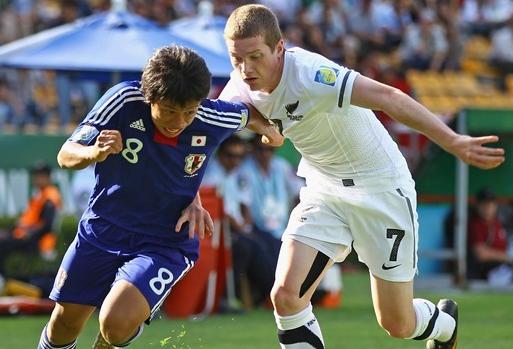
Ishige in action against New Zealand
New Zealand proposed an interesting challenge for this Japan side. They too had only conceded two goals in the group stages and the coach Aaron McFarland emphasised the team ethic in his side as their main asset. The premise seemed to be that this New Zealand side would be tough to break down and with a quarter final against Brazil at stake, Yoshitake slightly changed the formation to be more attacking.

Mochizuki took up a sole holding role and Ishige was pushed up to play off of Matsumoto in a sort of 4-1-3-1-1. Iwanami and Muroya came back into the defence, meaning that once again Hayakawa was pushed up to the left of the midfield three.

The attacking intent was clear and after a scrappy start it began to be put into practice. Once again Muroya and Kawaguchi were tirelessly overlapping and Hayakawa was thriving in his advanced role.

The breakthrough came after Ishige, having already had one cross-cum-shot well saved by New Zealand keeper Basalaj, won the ball off the full back Colvey and saw his cross float over the helpless keeper and in off the back post. Soon after Japan were two up; the lively Hayakawa was played in over the top via a delightful ball by Mochizuki and he simply rolled the ball across to Ishige for his second. Japan's game plan to find gaps between the centre back and full back was working and it wasn't long before it was three.

Matsumoto dropped deep and played that same ball, this time on the right, and after Ishige rather selfishly shot at goal, Hayakawa tucked in the rebound. It got worse for New Zealand before half time, when a lovely one-two between Hayakawa and Mochizuki down the left resulted in his shot being palmed by the keeper into the path of Colvey, who could only watch it bounce off of him and go in for 4-0. Strangely, with no apparent injury forcing the change, Yoshitake brought off holding player Mochizuki for striker Minamino in the 44th minute. Perhaps he knew the game was won and was already experimenting for the Brazil game.

New Zealand were clearly intent on damage limitation but the second half continued in similar fashion. The fifth goal came when once again Matsumoto, doing well in his new role out wide, laid the ball off for the advancing Muroya and his cross was tapped home by Minamino. The Japanese showed no signs of seeing the game out and continued to foray forward.

Minamino was fortunate to see his pass come back to him off of the referee, found Akino, whose crisp pass was collected by Hayakawa who calmly finished. 6-0 and although New Zealand had been poor, Japan had been very good nonetheless and thoroughly deserved the chance to take on Brazil in the quarters. A nice touch towards the end saw goalkeeper Awaka brought on, meaning that Yoshitake has already used his entire squad in the tournament.

      
Summary 
This Japan team has impressed a lot of people. They have averaged 60% possession and shown a surprising amount of tactical awareness and maturity so far. More importantly it's encouraging that the players and the coaches are addressing their faults after each game and consequently have improved and gathered momentum.

Despite having played well in the group stages the lack of clinical finishing was worrying - the scoreline against Argentina was largely glorified by awful goalkeeping and they should have beaten France but were wasteful. The changes in both personnel and tactics in the New Zealand game certainly addressed this issue.

Yoshitake has managed to find a system to accommodate the width Kawaguchi, Muroya, Hayakawa and Mastumoto all provide and in Minamino there is a lively goal threat. Akino is one of the more technically gifted players in the team and his new found role in the centre looks promising if the surrounding players can continue to give him options.

Perhaps most importantly, in Ishige, Japan have a player naturally gifted at arriving into the box at the right time and he could well be the source of their goals against Brazil.

Defensively the team looks good, yet bar the France game, they've been largely untested. They have looked most vulnerable when being hit on the counter and forced to run back towards their own goal.

With the talented pair of Piazon and Ademilson to deal with, they will certainly be tested in  this area. Add to that that the set piece delivery from Adryan is probably the best at the tournament and it's clear that if Japan are to progress the back four will have to work harder than they have had to so far.

Finally, whether Yoshitake uses two holding players or sticks to the formation that served them well today will be crucial. So far he has been bold with both his tactics and confidence in pre-match build ups and it's a difficult balancing act as clearly this Japan side are on a high, yet Brazil will have to be respected for the quality they possess.

In that space in front of the back four Adryan will need to be kept quiet, as will Ademilson, who has shown his talent for shooting from range by scoring three goals from outside the box already.

However, Ivory Coast showed that the game can be taken to Brazil and Japan should take confidence from that, let alone the performances that they have put in themselves so far this tournament.


Wednesday, June 29, 2011

Not just a training match

By Ray Gunawan

Kashiwagi in action for Urawa in their training match
So normally a training match isn't anything to get excited about, but sometimes it is.

Our training match against Niigata might just be one to get excited about. The final score of 3-0 is impressive; more importantly it shows that we might just have signs of life in our attack and our defense might not have to rely on Tsuboi and Nobu Yamada when either Nagata or Spiranovic is unavailable.

This was the starting XI:

GK: Yamagishi
DF: Ugajin; Aoyama; Tsutsumi; Noda
MF: Nozaki (Youth); Kashiwagi; Kojima
FW: Umesaki; Sergio; Yajima (Youth) 

Sergio scored in the first half and Umesaki grabbed a double in the second half.

Since regaining full fitness after a string of injuries Umesaki has been in impressive form for the Reds. When healthy Umesaki has been impressive for the Reds, it's just that he keeps on getting injured. I just hope that his injuries are behind him, imagine a front three which includes Genki and Umesaki on either flank; sounds appealing doesn't it?

All we need is a striker to slot in between them; hopefully we can find one in the Washington mould?

Yes I know it's just a training match, and I shouldn't get overly excited, but it is encouraging every time we shutout the opposition. Having Tsuboi and Nobu Yamada as your CB will do that to you. 

Seeing Aoyama playing well in defence along side our other younger defenders (Tsutsumi and Noda) is encouraging to see. I know Aoyama is naturally a defensive midfielder, but he does have the size and tools to play CB. Then we need to factor in Mizuki Hamada, who represented Japan U22 alongside Genki, can I start to hoping and believe we wont see Tsuboi and Nobuhisa in defense again?

What caught my attention the most from this training match was the performance of two individuals; Kashiwagi and Ugajin.

Both, from all reports, had solid outings after struggling so far in 2011. Coming into the 2011 season, both Kashiwagi and Ugajin were meant to be prominent figures, first team regulars but both haven't lived up to their expectation.

Kashiwagi came to the Reds at the beginning of the 2010 season from Hiroshima and was suppose to be our new playmaker. That didn't happen last year because Ponte was still pulling the strings; the offence went through Ponte as long as he was on the field. After Ponte left at the end of 2010 alot of us thought that the attack would be Kashiwagi's to run, but enter Marcio Richardes.

I wasn't too happy originally when they signed Richardes from Niigata as his game was similar to that of Ponte which would impede Kashiwagi's role on the team. I'm of the opinion that Kashiwagi's poor form this year is the result of bringing in Richardes, and Richardes hasn't been playing well this year. Is Richardes still on the field because we're paying him too much to be sitting on the bench? (Another time maybe?)

As for Ugajin, he was signed at the back end of 2009 from Ryutsu Keizai University and nothing was really expected from him. He was an ex-Urawa youth player so I guess it was an obvious choice for him to go back. When coach Finke gave him an opportunity he took it with both hands and didn't look back; that was until this year.

Americans call this phenomenon the "sophomore slump"; it happens to second year players who don't live up to the expectations (which are sometimes unfair), placed on them after a solid rookie season (first year). Ugajin exceeded everyone's expectation in 2010 and I do believe he will be back, hopefully sooner rather then later because he's an important piece to not only our defence, but our attack as well.

Imagine having Ugajin linking up with Genki on the left flank; the possibilities.

Ray runs the URDBLOG website focusing on all things Urawa Reds. Ray will contribute the occasional article to Asian Football Feast focusing on the happenings at Saitama.


Late goals punish teams in Japan

By Matt Collard

Mazzolla scored a late equaliser for Urawa
This weekend was the fifth match day in 15 days for the J. League clubs, and the heavy workload seemed to take its toll on the players.

There was the least amount of clean sheets in this round of fixtures than the previous four – only Shimizu S-Pulse and Yokohama F Marinos managed to shut out the opposition – as well as a host of late goals on show.

Just under half of the goals scored this weekend came in the final twenty minutes of matches – 14 out of 29 – including five stoppage time strikes.

The lack of concentration is alarming.

Cerezo Osaka, Urawa Reds and Kawasaki Frontale all grabbed equalisers on the road in stoppage time – Urawa’s coming in the 99th minute – and the next few weeks won’t get any easier with the rounds missed earlier in the season due to the natural disaster set to be played.

For Urawa it was a point against defending Champions Nagoya Grampus that keeps their heads marginally above water. While a draw in a tough away game is a good result, with just two wins and six draws the Reds are losing the winning feel and are deep in a relegation battle.

For Nagoya, it was a chance to set up a siege on second place dropped. With a game in hand and just the two losses, Grampus will be confident of a Asian Champions League placed finish but need to be weary of conceding too many draws.

Fellow Champions League hopefuls Kashima Antlers will also be furious with conceding the three points in the 90th minute after holding a 2-0 lead.

Yusuke Tanaka and Yu Kobayashi closed the deficit for Kawasaki in the final twenty to leap ahead of Sendai into third place. Kashima, even with two games in hand, have a momentous task if they want to play in Asia next season. They sit 13 points behind leaders Kashiwa Reysol and are struggling to pull together a string of consistent form. The defence needs to be tweaked and tightened up before a surge up the ladder can be considered.

Gamba scored five
against Sanfrecce
Free scorers Gamba Osaka toppled Sanfreece Hiroshima out of the top five with another thrilling win. Last week’s six goal match was trumped as Gamba surged to a 5-3 win, with five of the games goals coming in the second half.

Sanfreece Hiroshima scored in half time and full time stoppage, but conceded in too regular intervals throughout the 90 minutes. Gamba struck in the 3’, 34’, 55’, 78’ and 84’ with five different goal scorers.

The goal scoring ability from all over the pitch is a positive sign for Gamba having lost Usami to Bayern Munich, with Adriano also leaving the club.

For Kashiwa Reysol, it was back to business with a routine 4-1 away win after falling to Gamba Osaka last week. Worryingly for Reysol, though, they’ve lost their last three home games while winning the last three away – leaving a form guide of LWLWLW.

But Yokohama F Marinos ensured the leaders had some pressure kept on them with a 2-0 win away to Montedio Yamagata – an important result that keeps Kashiwa in sight for the rest of the league after previously second placed Sendai lost their first match of the 2011 J. League season. 

Alex Brosque scored the 83rd minute goal which condemned Vegalta Sendai to their first deflated trip back home of the year. It was his fifth goal for S-Pulse and it delivered a win that typifies the unpredictable nature of their season.

The loss bundles Sendai out of the top three, as their draw tally is the highest in the top half of the table. All the matches where the spoils were shared have left Sendai with the worst goal difference out of the top four – only their rock solid defence making up for an average attack – and it costed them when they finally lost.

Omiya Ardija and Albirex Niigata are also prone to draws, and the two both had 1-1 results at home in their respective matches on the weekend. Omiya struck in the 83rd to draw with fellow mid-table side Vissel Kobe, while for Albirex it was dropped points they may come regret, with Cerezo Osaka’s equaliser coming in the 93rd minute.

Cerezo scored late against Albirex
The last-gasp equaliser cost Albirex a huge chance to grab their first win since early May and go ahead of Cerezo, putting a bit of distance between themselves and the relegation zone. But, instead they find themselves just one point above relegation with their J. League division one status far from safe.

For Avispa Fukuoka, though, the situation is much more dire. Two goals in the first half for Jubilo Iwata was a deficit to big, and their 73rd minute goal didn’t spark any sort of comeback. The loss, Avispa’s 12th out of 13 games, makes for continued embarrassing reading as they show no signs of earning some respectability.

Jubilo continue to score wins in between losses frequent enough to keep them in touch with the top four, and this victory ensures they stay ahead of arch rivals S-Pulse and sit just five points off second place.


Title race wide open in Singapore

By Chee Seong - AFF Singapore correspondent

Mislav Karoglan scores the opener for SAFFC
Week 18 of the Great Eastern Yeos S.League saw 11 matches played. The unusually high amount of games played was due to the rescheduling of ties involving Etoile FC and Hougang United, who were investigated for an unpleasant incident.

Results were as follows:

Tampines Rovers 5-0 Woodlands Wellington
Courts Young Lions 0-1 Tanjong Pagar United
Hougang United 0-2 Geylang United
Gombak United 2-0 Balestier Khalsa
Tampines Rovers 1-2 SAFFC
Woodlands Wellington 1-5 Home United
Balestier Khalsa 2-4 Hougang United
Etoile FC 1-2 Courts Young Lions
Geylang United 1-0 Albirex Niigata(S)
SAFFC 2-1 Gombak United
Home United 2-0 Tampines Rovers

Week 18 of the S.League saw Tampines Rovers lose its lead at the top of the table. Two consecutive defeats against chasing duo Home United and SAFFC meant that the title race is wide open once again.

Etoile FC, who will be deducted five points for their involvement in the infamous "Hougang Brawl", also lost to Courts Young Lions. Hougang United, the other victims of a point deductions, had mix fortunes in their two games last week. They lost at home to the Eagles, but defeated Balestier after coming back strongly from two goals down.

Woodlands Wellington, who occupy last spot, had no answer as they suffered two drubbings by Tampines and Home respectively. Nothing seems to be going right  for the nothern based club. 

Title chasing Albirex also suffered a set back as they went down 0-1 to Geylang United. The Eagles, on the other hand, are on a 3 game winning streak and the other positive for them is they havent conceded in those last three victories!

SAFFC are on a high as they cut the lead at the top to just three point, with a game in hand. The top of the table clash on 6 July, between Home United and SAFFC will be one to watch as it will have a bit impact on the title race.

Fixtures this coming week:

27 June
Tanjong Pagar United vs Etoile FC
Geylang United vs Woodlands Wellington

28 June
Albirex Niigata(S) vs Balestier Khalsa

30 June
Hougang United vs Gombak United

1 July
Tanjong Pagar vs Geylang United

2 July
Etoile FC vs Woodlands Wellington


Sunday, June 26, 2011

Hong Kong gallant in defeat against Uzbekistan

By Yick Hong Lam - AFF Hong Kong correspondent


Hong Kong and Uzbekistan do battle
in the second leg of their 2012 Olympic Qualifier
With a hard fought effort in the first leg in Uzbekistan, the Hong Kong Olympic managed to get a 0-1 result.


Considering the difference in ability between the two teams, the coach and fans all agreed the result was indeed a good one, if somewhat lucky. Coach Liu Chun-Fai praised the team effort, and called for support in the second leg at home.

Attendance at Hong Kong football matches is always heavily affected by the weather, due to the lack of hardcore fans base.


A typhoon had been approaching the city two days before the match and came really close on match day.


2,782 is not a very good attendance in Hong Kong, but it's not that bad either. Strong wind and heavy rain would create very poor conditions for their passing game and the humidity and temperate will be difficult to adapt for the Uzbekistan players.


Therefore, discussion among the local fans was the weather was one of Hong Kong's secret weapons. The other, is James Stephen Gee Ha.


Nicknamed "The Bullet", the quick winger shared the best youth player of the year with the U23 striker To Hon-to and has just joined the league champion Kitchee during the off season. Fans and the coach hoped his absence in the first leg could see him surprise the Uzbek's with his pace on the counter.

However, James Ha was not included in the starting line up. The coach opted to deploy a defensive 4-5-1, similar to the first leg in Uzbekistan, which arguably only has three attacking players.


The idea is clear, keep the scoreline unchanged and a fresh James Ha would hurt the opponent when their stamina went down.

However, the tactics didn't work out as planned, with Uzbek captain Fozil Musaev scoring for Uzbekistan from 20 yards in just the 8th minute. Hong Kong U23 started the match slow and with a lack of confidence to hold the ball against the technically superior opponent.


Uzbekistan scored another goal in the 19th min, which meant Hong Kong had to score 4 goals to progress.

As the task had become a mission impossible, the Hong Kong players finally digested the pressure and started to press. In the mean time, Hong Kong substituted the ineffective number 10 Au Yeung Yiu-Chung with the secret weapon James Ha.

The weather didn't work out as the fans hoped, as the rain have stopped in the morning. 
Neither did James Ha.

The quick winger did add some pace to the team. But the two defensive midfielders didn't give the team any creative ideas. With the lack of support, Hong Kong's two best young players of the year didn't pull off anything up front, even though the Uzbekistan defense was not as assured at the passing game.

Still, the players fought hard in the entire second half, possibly thanks to the half time team talk. Uzbekistan didn't find it easy to split up the defense and couldn't pull off the attacking performance they had at home.


Both center halves for Hong Kong are not natural defenders, but their fighting spirit kept the team in game. Uzbekistan had two more chances to score but both were no real threat to goalkeeper Yapp Hung-Fai.

With this 0-2 loss, Hong Kong are now out of the 2012 London Olympic as most people expected.


Now all Hong Kong fans can turn their eyes to the new season, the last Hong Kong first division league before the Hong Kong super league project begins.